Denver Hail Damage Roof Claims: Complete Insurance Guide (2026)
In This Guide
If you own a home in Denver, your roof WILL get hit by hail. It's not a question of if, it's when. Colorado consistently ranks #1 in the nation for hail damage insurance claims, with the Denver metro experiencing an average of 3-4 significant hailstorms per year. The 2023 season alone caused over $2.5 billion in insured losses across the Front Range.
Understanding the insurance claim process is the difference between a $0 out-of-pocket roof replacement (minus deductible) and paying $15,000+ yourself. This guide walks you through every step.
Colorado's Hail Problem By the Numbers
- $2.5 billion+ in insured hail losses across Colorado in 2023
- #1 state in the nation for hail damage claims, every year
- 3-4 significant storms hit Denver metro annually (May-September peak)
- $12,000-18,000 average roof replacement claim value in Denver
- 7-10 years average time between hail damage claims for Denver homeowners
- 15-35% insurance discount for homes with Class 4 impact-resistant shingles
Hail corridor: the area from Colorado Springs through Denver to Fort Collins gets hit hardest. Within the metro, eastern suburbs (Aurora, Centennial, Parker, Castle Rock) tend to see larger hail due to storm patterns moving off the Front Range.
Step-by-Step Claim Process
Step 1: Document Immediately (Day of Storm)
Within hours of a hailstorm:
- Photograph your roof from the ground (don't climb on a wet roof)
- Photo gutters for dents, especially downspouts
- Photo siding from multiple angles
- Photo window screens, AC condenser, outdoor furniture
- Photo vehicles for hail damage
- Note the exact date, time, and approximate hail size
- Save weather reports and local news coverage of the storm
Step 2: Call a Local Roofer (Day 1-3)
This is the most important step most homeowners skip. Before calling your insurance company, get a free inspection from a reputable local roofer. They'll:
- Inspect the roof for actual hail impacts (not just wear)
- Document damage with photos and measurements
- Give you an honest assessment of whether filing a claim is worthwhile
- Prepare to be present when the insurance adjuster inspects
Why this matters: insurance adjusters work for the insurance company. Their incentive is to minimize payout. Your roofer works for you and advocates for full replacement when damage warrants it.
Step 3: File the Claim (Day 3-7)
- Call your insurance company's claims number
- Provide the storm date and description of damage
- Request an adjuster inspection appointment
- Get your claim number in writing
- Tip: file within 60 days for best results. The longer you wait, the harder it is to prove storm-specific damage vs. wear and tear.
Step 4: Adjuster Inspection (Week 2-4)
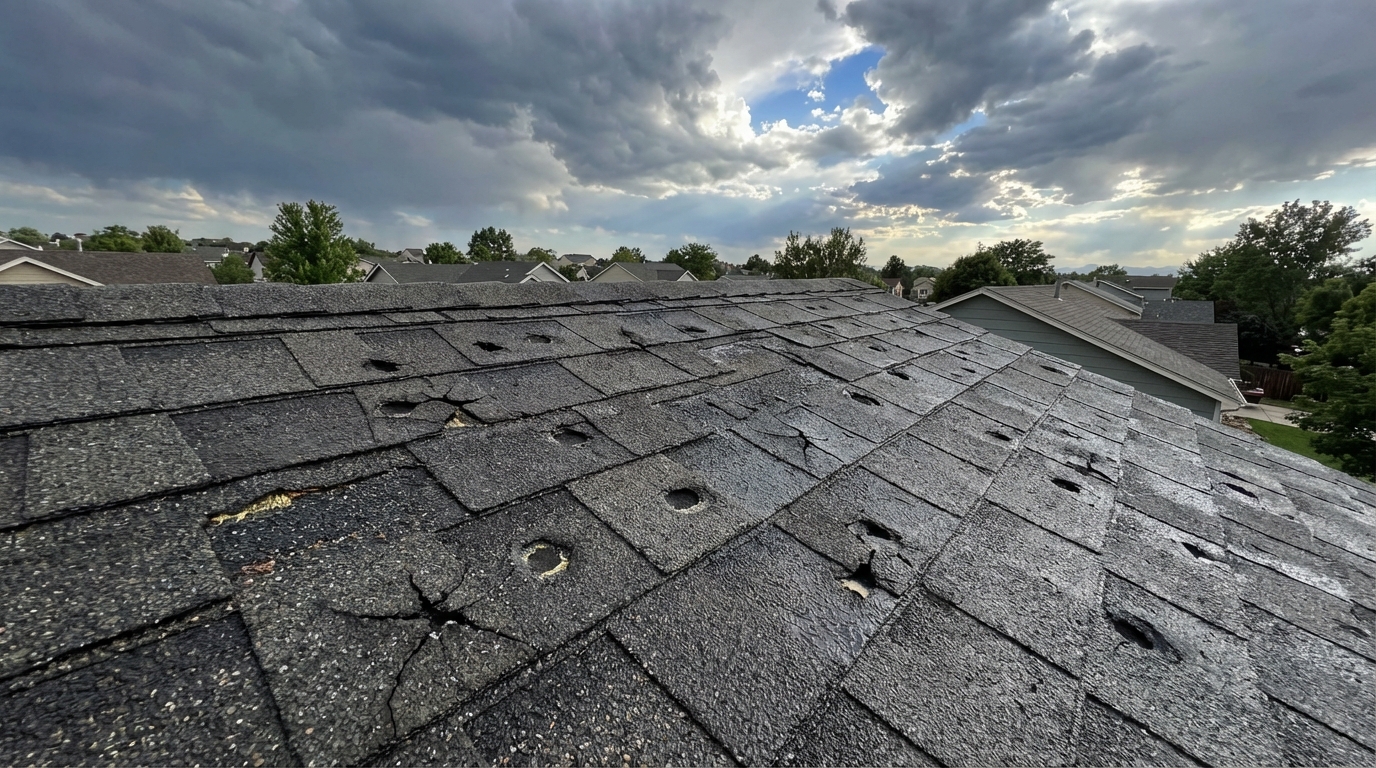
The insurance adjuster will inspect your roof. Have your roofer present. This is not adversarial, it's collaborative, but your roofer ensures nothing gets missed. The adjuster will:
- Mark and count hail impacts on test squares
- Photograph damage
- Assess collateral damage (siding, gutters, screens)
- Write a scope of work and estimate
Step 5: Review the Scope (Week 3-5)
You'll receive an insurance estimate. Review it with your roofer. Common items insurance misses:
- Ridge vent replacement
- Pipe boot flashing
- Drip edge
- Starter strip shingles
- Ice and water shield (code-required in Denver)
- Steep pitch labor charges
Working with Insurance Adjusters
Adjusters are professionals doing a job, not adversaries. But their job is to write an accurate scope at the lowest defensible cost. Your job is to ensure accuracy:
- Be present or have your roofer there. Never let an adjuster inspect alone.
- Point out all damage. Adjusters inspect dozens of roofs per week. They may miss details.
- Don't sign anything on the spot. Take the estimate, review with your roofer, then respond.
- Ask for their methodology. How many test squares? What size hail did they document?
If the adjuster denies your claim or approves only repairs, you have the right to request a re-inspection, submit a supplement from your contractor, or hire a public adjuster.
Supplements and Negotiations
Supplements are additional line items submitted after the initial estimate. They're completely normal and expected. Common supplements:
- Code upgrade costs (ice/water shield, ventilation requirements)
- Decking replacement discovered during tear-off
- Additional collateral damage (siding, gutters)
- Line items missed in the initial scope
Experienced roofing contractors submit supplements on most jobs. This isn't gaming the system, it's ensuring the scope accurately reflects the work needed. Insurance companies expect and process supplements routinely.
Choosing a Contractor for Insurance Work
- Experience with insurance claims: They should know Xactimate (the software adjusters use to write estimates) and be comfortable submitting supplements.
- Local company with a physical address: Storm chasers from out of state won't be around for warranty claims.
- Will work with your insurance directly: They should handle the paperwork, not you.
- Won't ask you to sign an Assignment of Benefits (AOB): AOBs give the contractor control of your claim, which can lead to disputes.
- Warranty: Look for both workmanship warranty (5-10 years) AND manufacturer warranty (25-50 years).
Common Mistakes That Cost Homeowners
- Waiting too long to file. Damage gets worse. Evidence fades. Insurance argues pre-existing condition. File within 60 days.
- Not getting an independent inspection. Trusting only the adjuster's opinion leaves money on the table.
- Choosing the cheapest contractor. Insurance pays for quality work. Choosing a cheap contractor means pocketing the difference, which is technically fraud and voids your warranty.
- Accepting the first estimate without review. First estimates are often 15-25% below final approved amounts.
- Paying for repairs when replacement is warranted. Partial repairs on a comprehensively damaged roof just delay the inevitable.
Class 4 Shingles: The Smart Investment
If you're replacing your roof in Denver, upgrading to Class 4 impact-resistant shingles is almost always worth it:
| Factor | Standard Shingles | Class 4 Impact-Resistant |
|---|---|---|
| Material cost (2,000 sq ft) | $9,000-14,000 | $11,000-17,000 |
| Insurance discount | 0% | 15-35% annually |
| Annual savings (typical) | $0 | $300-700/year |
| Breakeven on upgrade cost | N/A | 4-7 years |
| Hail damage likelihood | High | Very low |
| Claim frequency | Every 7-10 years | Rarely |
The math is clear: the $2,000-3,000 upgrade cost pays for itself in insurance savings within 5-7 years, PLUS you avoid the hassle of future claims.
Timeline: From Storm to New Roof
| Phase | Timeline | Action |
|---|---|---|
| Storm hits | Day 0 | Document damage immediately |
| Roofer inspection | Days 1-3 | Free inspection and damage assessment |
| File claim | Days 3-7 | Call insurance, get claim number |
| Adjuster inspection | Weeks 2-4 | Have roofer present |
| Estimate review | Weeks 3-5 | Review with roofer, submit supplements |
| Approval | Weeks 4-8 | Insurance approves final scope |
| Replacement | Weeks 6-12 | 1-3 day installation |
Total timeline: 6-12 weeks from storm to new roof. Can be faster outside of peak season. After major metro-wide storms, timelines extend as every roofer in Denver is booked solid.
Free hail damage inspections across Denver. Call Trustie Services at (720) 213-5521.
Ready to Get Started?
Text a photo for a free quote. We reply with a price in minutes. Serving Denver, Aurora, Lakewood, Boulder, and 50+ Colorado cities.
📱 Call (720) 213-5521Related Denver Services
Denver Hail Damage Timeline: What Happens After the Storm
Denver averages 7-9 significant hailstorms per year, mostly between May and August. When one hits your neighborhood, the clock starts ticking on several deadlines you need to know about.
Within 24 hours: Document everything. Take photos of your roof from the ground (don't climb up — that's what roofers are for), photograph any damage to gutters, siding, window screens, and outdoor furniture. Check your car for dents. All of this creates a contemporaneous record that insurance adjusters respect far more than claims filed weeks later with fuzzy memories.
Within 72 hours: Get an independent inspection. Call a licensed Denver roofer — not a storm chaser with out-of-state plates. After major hailstorms, Denver gets flooded with "roofing companies" from Texas and Oklahoma who follow storms across the country. They'll be gone in 6 months, and so will your warranty. A local roofer inspects for free, documents damage with photos and a written report, and gives you an honest assessment of repair vs. replace.
Within 1 year: File your claim (but sooner is better). Colorado law requires insurers to accept hail claims within one year of the damage event. However, filing within 30 days produces significantly better outcomes. Why? Fresh damage is easy to attribute to a specific storm. Six-month-old damage? Your adjuster will argue it's "wear and tear." That argument is harder to make when your documentation is dated 3 days after a confirmed hailstorm.
The adjuster visit (days 3-14). Your insurance company sends an adjuster to inspect. Important: you have the right to have your contractor present during this inspection. A qualified Denver roofer will ensure the adjuster doesn't miss damage that's invisible from the ground but obvious up close. Adjusters have 15-20 roofs to inspect that day. Your roofer has one: yours.
After approval: Choose your contractor carefully. Your insurance company cannot dictate which contractor you use. They can suggest their "preferred vendors," but Colorado Insurance Regulation 3-5-1 explicitly protects your right to choose. Pick a contractor who's been in Denver for 5+ years, carries proper insurance, and offers a workmanship warranty separate from the material warranty. Check their credentials carefully and make sure they pull proper permits.
Need a post-storm roof inspection? Call Trustie Services at (720) 213-5521. We've inspected thousands of Denver roofs after hailstorms and we'll give you an honest assessment — even if the answer is "your roof is fine, don't file a claim."
Frequently Asked Questions
Yes. Hail damage is a covered peril under standard Colorado homeowners policies. If damage exceeds the repair threshold, insurance covers full roof replacement minus your deductible. Denver's frequency of hail makes this one of the most-used coverage types.
Colorado law gives you 1 year from the date of the storm. However, filing within 60 days produces significantly better outcomes. The longer you wait, the harder it is to prove damage was storm-related vs. normal wear.
No. Always have your roofer present during the adjuster's inspection. Your roofer can point out damage the adjuster might miss and ensure the scope accurately reflects needed repairs. This is the single most impactful step in the claim process.
You can request a re-inspection with a different adjuster, submit a supplement with your contractor's documentation, hire a public adjuster to advocate for you, or as a last resort, file a complaint with the Colorado Division of Insurance.
Absolutely. The 15-35% insurance discount alone pays for the $2,000-3,000 upgrade in 4-7 years. Plus you're far less likely to need a replacement after future hailstorms. In Colorado specifically, Class 4 is the smartest roofing investment.
Typically just your deductible, which ranges from $1,000-2,500 for most Denver homeowners. Insurance covers the rest. Any contractor offering to 'cover your deductible' is committing fraud.