Denver Kitchen Remodel Costs in 2026
The average kitchen remodel in Denver costs between $15,000 and $75,000, with most homeowners spending $25,000 to $45,000 for a mid-range renovation. That's a wide range because kitchens vary enormously in size, scope, and finish level. A cosmetic refresh (paint cabinets, new hardware, update backsplash) starts around $8,000. A full gut-and-rebuild with custom cabinets, quartz countertops, and new appliances pushes past $60,000.
| Remodel Scope | Cost Range | Timeline | What's Included |
|---|---|---|---|
| Cosmetic refresh | $5,000 - $15,000 | 1-2 weeks | Paint cabinets, new hardware, backsplash, lighting |
| Mid-range remodel | $25,000 - $45,000 | 4-8 weeks | New countertops, refaced cabinets, flooring, appliances |
| Major renovation | $45,000 - $75,000 | 8-12 weeks | Custom cabinets, layout changes, all new everything |
| Luxury/custom | $75,000 - $150,000+ | 12-20 weeks | High-end materials, structural changes, smart home integration |
Where the Money Goes
Cabinets (30-40% of Budget)
Cabinets are the single biggest expense in any kitchen remodel. In Denver, stock cabinets from Home Depot or Lowe's run $150-$400 per linear foot installed. Semi-custom (like KraftMaid or Diamond) run $400-$800. Full custom from a Denver cabinet shop runs $800-$1,500+ per linear foot. Most Denver kitchens have 20-30 linear feet of cabinets.
The budget-friendly move that delivers the best ROI? Professional cabinet painting. For $2,500-$6,000, you get a factory-fresh look on your existing cabinets with new hardware. It's the single highest-ROI kitchen upgrade.
Countertops (10-15% of Budget)
Denver's most popular countertop materials in 2026:
- Quartz: $50-$120 per sq ft installed. The dominant choice. Durable, low-maintenance, huge color selection. Brands like Caesarstone, Cambria, and Silestone are all available through Denver fabricators.
- Granite: $40-$100 per sq ft. Still popular, especially in traditional kitchens. Denver has excellent local fabricators with large slab selections.
- Butcher block: $40-$80 per sq ft. Warm, natural look. Requires regular oiling in Denver's dry climate.
- Laminate: $20-$50 per sq ft. Modern laminates look remarkably good and are nearly indestructible. Great for budget remodels.
- Concrete: $70-$150 per sq ft. Trendy in Denver's industrial-modern aesthetic. Must be sealed properly.
Appliances (15-20% of Budget)
Appliance packages in Denver range from $3,000 for a basic set to $20,000+ for professional-grade. The sweet spot for most Denver homeowners is $5,000-$10,000 for a quality package from Samsung, LG, or KitchenAid. Consider altitude adjustments: gas ranges may need high-altitude orifice kits, and convection ovens perform slightly differently at 5,280 feet.
Flooring (5-10% of Budget)
Denver kitchen flooring trends: luxury vinyl plank (LVP) dominates at $3-$8 per sq ft installed, offering waterproof durability that looks like hardwood. Real hardwood ($8-$15) and tile ($6-$12) remain popular in higher-end remodels. At Denver's altitude, wood flooring needs proper acclimation (2-3 weeks in the home before installation) due to low humidity.
Denver Kitchen Design Trends for 2026
The Mountain Modern Look
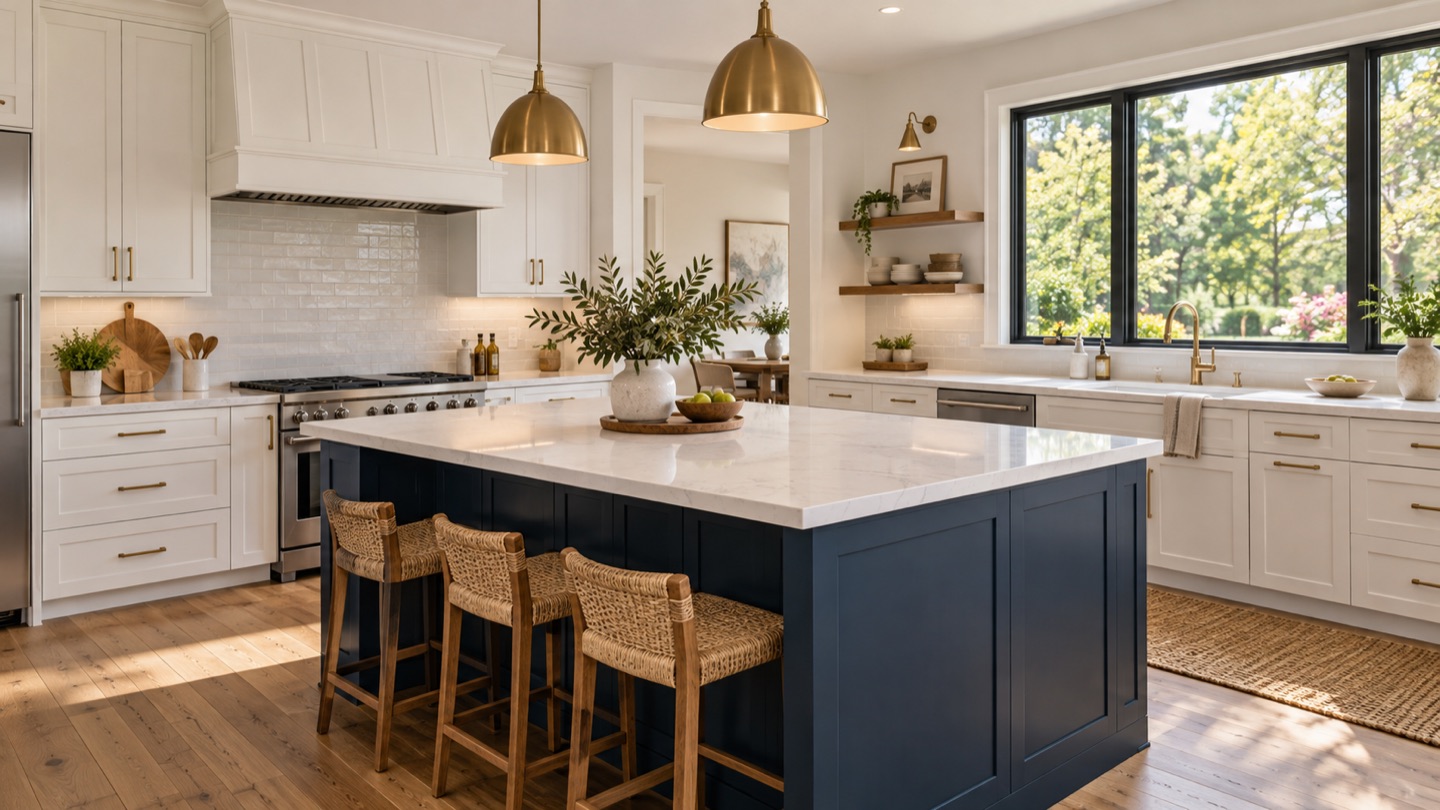
Denver's most requested kitchen style blends clean modern lines with natural warmth: white or light gray cabinets, warm wood accents (open shelving, range hood cover, island), quartz countertops, and matte black or brushed gold hardware. It's sophisticated without being cold.
Open Shelving and Mixed Storage
Full upper cabinets are giving way to combinations of closed uppers and open shelving. This works particularly well in Denver's bright, sunny kitchens where natural light can showcase displayed items.
Oversized Islands
Denver's open floor plans lend themselves to large kitchen islands. Islands 8-10 feet long with seating for 4-5 have become the kitchen's social hub, especially in family-oriented neighborhoods like Stapleton, Highlands Ranch, and Reunion.
Denver Permit Requirements
In Denver, you need a building permit for kitchen remodels that involve:
- Moving or adding plumbing fixtures
- Electrical work beyond simple fixture replacement
- Structural changes (removing walls, moving load-bearing elements)
- Gas line modifications
- Adding or moving windows
Cosmetic work (painting, countertop replacement, cabinet refacing, flooring) does not require permits. Denver permit costs range from $150-$500 for residential kitchen work. The process takes 2-4 weeks for plan review. See our complete Denver permits guide for details.
Timeline: What to Expect
Planning and Design (2-6 weeks)
Design, material selection, ordering. Custom cabinets have 6-10 week lead times. Plan ahead.
Demolition (2-5 days)
Existing cabinets, countertops, flooring, and backsplash removed. Professional demolition is faster and cleaner than DIY.
Rough-ins (1-2 weeks)
Plumbing, electrical, and gas modifications. Inspection required before closing walls.
Installation (2-4 weeks)
Cabinets → countertops (templated after cabinet install, 1-2 week fabrication) → backsplash → flooring → appliances → fixtures → trim.
Finishing (3-5 days)
Paint touch-ups, hardware installation, final connections, cleaning, and punch list items.
Maximizing Kitchen Remodel ROI in Denver
According to Remodeling Magazine, a mid-range kitchen remodel in the Mountain region recoups 65-75% of costs at resale. In Denver's competitive market, a well-done kitchen can recoup even more. The keys to maximizing ROI:
- Don't over-improve for the neighborhood. A $100K kitchen in a $400K neighborhood won't recoup. Match your investment to your home's value tier.
- Focus on layout and functionality over luxury materials. A well-designed kitchen with mid-range materials beats a poorly laid out kitchen with premium everything.
- Neutral finishes appeal to more buyers. Save bold choices for easily changeable elements like paint and hardware.
- Energy-efficient appliances are a selling point in eco-conscious Denver.
Choosing a Kitchen Remodel Contractor in Denver
Kitchen remodels require coordination between multiple trades: demolition, framing, plumbing, electrical, drywall, tile, cabinets, countertops, painting, and finish carpentry. Working with a general contractor who manages all trades (like Trustie Services) simplifies the process and prevents trade scheduling conflicts that delay projects.
Get a free kitchen remodel estimate: call (720) 213-5521 or fill out our form.
What Makes Denver Kitchen Remodels Different
Kitchen remodeling in Denver presents unique challenges and opportunities that homeowners in other cities do not face. The combination of high altitude, low humidity, intense UV exposure, and Denver's specific building code requirements all influence material selection, construction methods, and project planning in ways that national kitchen remodeling guides simply do not address.
Denver's altitude of five thousand two hundred eighty feet affects everything from how gas appliances are calibrated to how paint and adhesives cure. Gas ranges need high-altitude orifice kits to maintain proper flame height and heat output. Convection ovens may need temperature adjustments because lower air pressure affects heat transfer. Even the water boiling point is lower at altitude, which affects steam generation from dishwashers and pot-fill faucets. These are small details, but a kitchen remodeler who understands Denver will address them proactively rather than leaving you to discover issues after the project is complete.
Low humidity is Denver's other major factor. Wood absorbs and releases moisture based on ambient humidity, and Denver's average thirty-five percent humidity means wood products need proper acclimation before installation. Solid wood cabinets, butcher block countertops, and hardwood flooring should sit in your home for at least two weeks before installation to reach equilibrium moisture content. Failing to acclimate wood products leads to gaps, warping, and cracking after installation as the wood dries out further in Denver's arid environment.
Denver's building and planning departments also have specific requirements for kitchen remodels that involve structural, plumbing, or electrical changes. The permit process typically takes two to six weeks for plan review, which needs to be built into your project timeline. Working without required permits is a gamble that can backfire badly if you ever sell the home, file an insurance claim, or have an inspector discover unpermitted work during a future project. See our complete Denver permits guide for details on what requires a permit and what does not.
Kitchen Remodel Mistakes Denver Homeowners Make
After working on kitchens across the Denver metro, these are the most expensive and most common mistakes we see homeowners make during kitchen remodeling projects.
Ignoring the Work Triangle
The kitchen work triangle, the distance between the sink, stove, and refrigerator, has been a design principle for nearly a century because it works. Each leg of the triangle should be between four and nine feet, with a total perimeter between thirteen and twenty-six feet. Deviating too far from these guidelines creates a kitchen that is inefficient and tiring to work in, no matter how beautiful it looks. When changing your kitchen layout, verify the work triangle before committing to a design.
Skimping on Storage
Denver's active lifestyle means kitchens need to accommodate everything from everyday cooking to meal prep for hiking trips, ski weekends, and outdoor entertaining. Before finalizing cabinet plans, inventory everything you currently store in or near your kitchen. Add ten to fifteen percent more storage capacity than you think you need. Pull-out drawers, lazy Susans, vertical dividers for baking sheets, and deep drawers for pots and pans maximize usable storage within the same footprint.
Choosing Countertops Before Cabinets
Cabinets dictate the layout, and countertops are templated to fit the installed cabinets. Choosing countertop material early is fine, but do not order or fabricate countertops until cabinets are physically installed and verified level. Even small variations in cabinet installation affect countertop fit, and stone countertops cannot be adjusted after fabrication.
Underestimating the Timeline
A realistic kitchen remodel timeline in Denver is eight to sixteen weeks from demolition to final punch list. Custom cabinets add six to twelve weeks of lead time before that. Countertop fabrication adds one to two weeks after cabinet installation. Backordered appliances, which remain common in 2026, can delay completion by weeks or months. Start planning and ordering materials as early as possible to minimize delays.
Not Planning for Temporary Kitchen
Your kitchen will be completely non-functional during the construction phase. Set up a temporary kitchen with a microwave, toaster oven, small refrigerator, and access to a bathroom sink in another room. Families who plan for this disruption handle the process much better than those who assume it will be manageable without preparation.
Denver Kitchen Remodel Cost Breakdown by Neighborhood
Kitchen remodel costs vary across the Denver metro based on home values, contractor competition, and local expectations. In high-value neighborhoods like Cherry Creek, Hilltop, and Washington Park, homeowners routinely spend fifty thousand to one hundred thousand dollars on kitchen remodels because the home values justify the investment and the neighborhood sets expectations for finish quality. In mid-range neighborhoods like Stapleton, Highlands Ranch, and Arvada, the sweet spot is twenty-five thousand to fifty thousand dollars for a remodel that adds real value without over-improving for the area. In entry-level neighborhoods, a strategic remodel of ten thousand to twenty thousand dollars focusing on cabinet painting, countertop replacement, and new hardware delivers the best return.
The Contractor Selection Process
Choosing the right contractor is the single most impactful decision in your kitchen remodel, more important than any material or design choice. A skilled contractor with mid-range materials will produce a better kitchen than a mediocre contractor with premium materials every time. The process should begin with collecting three to five referrals from people whose kitchens you have actually seen and admired. Online reviews are helpful but nothing replaces seeing finished work in person.
Interview each contractor in your home so they can assess the specific conditions of your kitchen. Ask about their experience with kitchens specifically, not just general remodeling. Ask for a detailed written proposal that breaks down costs by category rather than providing a single lump sum. Ask about their communication process, how they handle change orders, their warranty, and their expected timeline. Check their Colorado contractor license, insurance, and Better Business Bureau status. And trust your gut about the working relationship because you will be communicating with this person daily for several weeks to months.
Trustie Services provides full kitchen remodeling across the Denver metro. From demolition through final trim, we coordinate every trade and keep you informed every step of the way. Call (720) 213-5521 for a free kitchen consultation.
Hidden Costs Most Denver Homeowners Miss
Beyond the obvious costs of cabinets, countertops, flooring, and appliances, Denver kitchen remodels carry hidden expenses that catch homeowners off guard. The first is temporary living costs during the construction phase. If your kitchen remodel includes a full gut renovation lasting four to eight weeks, you will spend significantly more on dining out and takeout than normal. Budget an extra five hundred to one thousand dollars per month for food expenses during construction. Families with children should plan even higher because the convenience factor of a functioning kitchen is irreplaceable during busy school and activity schedules.
Structural surprises behind walls represent another hidden cost category. When demolition reveals the interior of walls and ceilings for the first time in decades, problems frequently emerge. Outdated wiring that does not meet current code needs replacement. Old galvanized plumbing showing signs of corrosion should be replaced with copper or PEX while walls are open. Water damage from old leaks may have compromised framing members that need sistering or replacement. Inadequate insulation in exterior walls is common in older Denver homes and should be addressed when walls are already open. These discoveries are normal and expected by experienced contractors, which is why a fifteen to twenty percent contingency budget is standard practice for kitchen remodels in any Denver home older than thirty years.
Permit fees, design fees, and project management costs also add up. Denver permit costs for kitchen remodels range from one hundred fifty to five hundred dollars. If you hire a kitchen designer, expect to pay one thousand to five thousand dollars for design services, though many cabinet companies include design as part of their sales process. General contractor overhead and profit typically adds fifteen to twenty-five percent to the combined cost of labor and materials, which is the cost of having one person manage the entire project rather than coordinating six to eight separate trades yourself.
Energy Efficiency Upgrades During Your Kitchen Remodel
A kitchen remodel is the ideal time to improve energy efficiency because walls are already open and systems are being replaced. Denver homeowners who incorporate energy upgrades during their remodel benefit from lower utility bills for years to come. Adding insulation to exterior kitchen walls while drywall is removed costs a fraction of what it would as a standalone project. Upgrading to LED under-cabinet and recessed lighting reduces energy consumption by seventy-five percent compared to older lighting and provides better illumination for cooking and food preparation. Installing an Energy Star rated dishwasher, refrigerator, and range saves one hundred to three hundred dollars annually in energy costs. Adding a recirculating hot water system eliminates the wait for hot water at the kitchen sink, saving both water and the energy used to heat water that goes down the drain while waiting.
Denver's abundant sunshine also creates opportunities for kitchen lighting design. Skylights and solar tubes can bring natural light into kitchens that lack adequate windows, reducing daytime lighting costs to zero while creating a bright, inviting workspace. In Denver's three hundred days of sunshine, natural lighting strategies pay for themselves quickly and make kitchens feel dramatically larger and more pleasant.
Xcel Energy offers rebates for qualifying energy efficiency improvements made during Denver home renovations. Check their current rebate catalog before finalizing your remodel plans, as available rebates can offset the incremental cost of higher-efficiency equipment and insulation upgrades.
Questions to Ask Before Starting
Before committing to a kitchen remodel in Denver, answer these questions honestly. What is your realistic total budget including a fifteen percent contingency for unexpected costs? How long can your family function without a kitchen, and do you have a plan for meals during construction? Are you staying in the home during the remodel or do you have temporary housing options? Have you researched and selected your major materials including cabinets, countertops, flooring, and appliances, or do you need design assistance? Is your project scope clearly defined, or are you likely to add work once demolition reveals the interior of your walls?