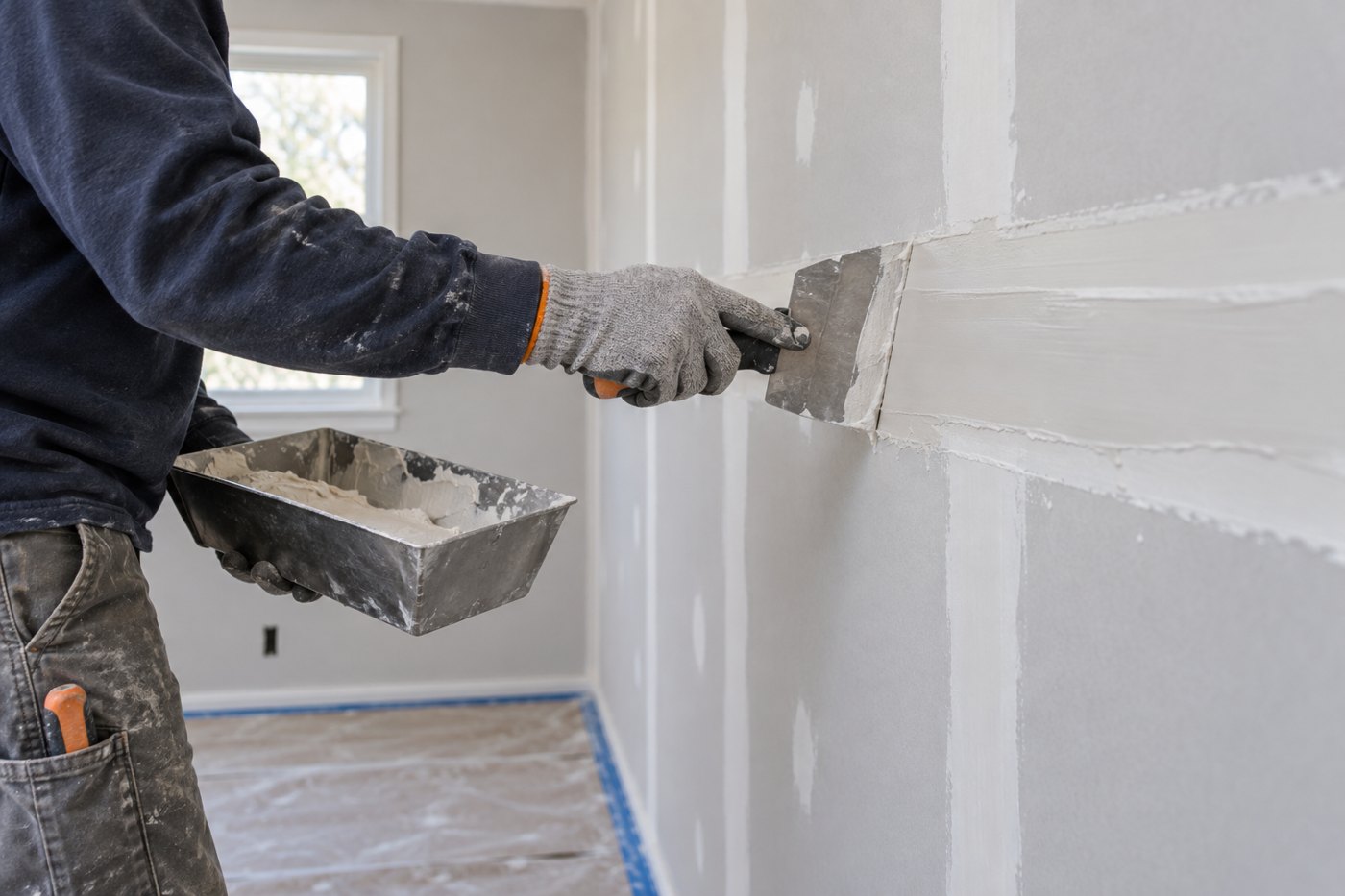
Every Denver home has drywall issues. It's not a matter of if, it's a matter of how many. Between Colorado's extreme humidity swings (10% in winter to 40-50% in summer), expansive clay soil movement, settling foundations, nail pops from thermal cycling, and the occasional doorknob through the wall, drywall repair is one of the most common home maintenance needs on the Front Range.
This guide covers everything from patching a small hole to dealing with cracked seams from foundation movement. Real Denver pricing, DIY guidance, and how to know when it's time to call a professional.
| Repair Type | DIY Cost | Professional Cost |
|---|---|---|
| Small hole (under 4") | $5-15 | $75-150 |
| Medium hole (4-12") | $15-30 | $125-250 |
| Large hole (12"+) | $20-50 | $200-400 |
| Nail pops (10-20) | $10-20 | $150-300 |
| Tape seam repair (per seam) | $15-30 | $150-350 |
| Ceiling crack repair | $20-40 | $200-500 |
| Water damage (per section) | N/A | $300-1,000+ |
| Full room retexture | $50-100 | $500-1,200 |
| Full room hang + finish | N/A | $1,500-4,000 |
Most drywall contractors in Denver have a minimum service call of $150-250 regardless of repair size. For small jobs, it often makes sense to bundle multiple repairs into one visit.
Those little bumps or circles that appear randomly on walls and ceilings. Caused by the nail backing out of the stud due to wood shrinkage and thermal cycling. Extremely common in Denver homes 3-10 years old as the framing lumber fully seasons in Colorado's dry climate. Most homes develop 10-30 nail pops in the first five years.
Cracks along the seams where drywall sheets meet. In Denver, this happens because humidity drops to 10-15% in winter, causing drywall to shrink and pull tape joints apart. When humidity returns in summer, the drywall swells back but the tape is already compromised. Each cycle makes it worse.
Cracks running along outside corners. Usually caused by the house settling or impact damage. Metal corner bead can also crack from thermal expansion at exterior wall corners where temperature differentials are highest.
Often the most concerning-looking but usually the least structural. Most ceiling cracks in Denver follow the tape seams and are caused by attic temperature cycling. The attic can swing 80°F+ in a single day in Colorado (below freezing at night, 100°F+ in summer afternoon sun), and that movement transfers to the ceiling below.
Diagonal cracks radiating from door/window corners signal foundation movement. Denver's expansive clay soils (bentonite) are notorious for this. These cracks will come back until the underlying soil/foundation issue is addressed.
Denver's indoor humidity ranges from 10-15% in winter (without a humidifier) to 40-50% in summer. That's a massive swing that causes drywall to repeatedly shrink and swell. Most US cities have much narrower humidity ranges.
Denver sits on bentonite clay that can swell 8-12% when wet and shrink significantly when dry. This creates seasonal foundation movement that transfers to drywall as cracks, especially around doors and windows. Homes in Montbello, Green Valley Ranch, Stapleton, and DTC are particularly affected.
Denver's building boom (2015-2024) produced thousands of homes using lumber that was kiln-dried for sea-level humidity. In Denver's much drier climate, that lumber continues to dry and shrink, causing nail pops and tape failures for 3-7 years after construction. If your Denver home is under 10 years old, nail pops are essentially guaranteed.
50-60°F daily temperature swings (common 200+ days per year) cause framing to expand and contract daily. This repetitive cycling stresses drywall connections more than steady-temperature climates.
| Repair | DIY Difficulty | Recommended |
|---|---|---|
| Small nail holes | Easy | DIY |
| Nail pops | Easy-Medium | DIY if <10; Pro if widespread |
| Small holes (under 4") | Easy | DIY with patch kit |
| Medium holes (4-12") | Medium | DIY if you're handy; Pro for visible areas |
| Large holes | Hard | Professional |
| Tape seam repair | Medium-Hard | Professional (hard to make invisible) |
| Ceiling repair | Hard | Professional (gravity makes everything harder) |
| Texture matching | Hard | Professional (see section below) |
| Water damage | N/A | Professional (must address source + mold risk) |
For holes under 4 inches, this is a genuine DIY job:
Denver tip: Spackle dries fast here. For larger patches, mist the area lightly with water before applying to extend working time. Pre-mixed spackle works better than powder-mix in our dry climate.
Most Denver homes built 1970-2010 have textured walls and ceilings. Matching that texture on a repair is the hardest part of drywall work. Types of texture common in Denver:
Matching existing texture requires the same spray tip, pressure, distance, material consistency, and technique as the original. Professional drywall finishers practice these skills constantly. DIY texture matching almost always looks "off" next to the original.
Water-damaged drywall needs assessment, not just patching:
Need drywall repair? Call Trustie Services at (720) 213-5521. Professional drywall repair and finishing across the Denver metro.
Text a photo for a free quote. We reply with a price in minutes. Serving Denver, Aurora, Lakewood, Boulder, and 50+ Colorado cities.
📱 Call (720) 213-5521If you've patched a drywall crack in Denver and watched it reappear within a year, you're not imagining things. Denver's average indoor humidity during winter is 15-25% — so dry that your drywall literally shrinks. Then summer monsoon season brings indoor humidity up to 40-50%, and the drywall expands. This seasonal expansion-contraction cycle reopens cracks at joints, corners, and stress points.
The fix isn't more mud. Reapplying joint compound to the same crack is like putting a Band-Aid on a cut that keeps reopening. Professional drywall repair in Denver uses flexible solutions: mesh tape (not paper tape) over cracks, elastomeric joint compound that moves with the wall, and in severe cases, stress-relief clips that allow the drywall to float at ceiling-wall joints.
Nail pops are Denver's other chronic issue. Those little circular bumps appearing on your walls and ceilings? That's thermal cycling pushing nails out of studs. The lumber in your walls expands and contracts with temperature changes, and Denver's 100°F annual temperature swing (from -10°F to 90°F+) is brutal on framing. The permanent fix is to add a drywall screw 1 inch above and below the popped nail, countersink the old nail, then patch and paint. Just pushing the nail back in guarantees it pops again next winter.
Settlement cracks vs. structural cracks: Know the difference. Hairline cracks at door and window corners? Normal settlement in Denver's expansive clay soils — patch with flexible compound and repaint. Diagonal cracks wider than 1/8 inch, especially if they run from window corners toward the floor? That's potentially structural, caused by foundation movement. Don't patch over these — get a structural assessment first. Denver's clay soils cause more foundation movement than almost any soil type in the country.
For drywall repair that actually lasts in Denver's climate, call Trustie Services at (720) 213-5521. We use Denver-specific techniques because we've learned (the hard way) that standard methods from humid climates don't hold up here. Also check our guides on painting costs and basement finishing if you're planning a bigger project.
Small holes: $75-150 (pro) or $5-15 (DIY). Medium repairs: $125-250. Ceiling cracks: $200-500. Water damage: $300-1,000+. Most Denver drywall contractors have a minimum service call of $150-250.
Denver's dry climate causes framing lumber to shrink more than in humid climates. Thermal cycling (50-60°F daily swings) causes wood to expand and contract, pushing nails out. Most Denver homes develop 10-30 nail pops in the first 5 years. It's normal.
Two common causes in Denver: humidity cycling (fix with a whole-house humidifier set to 30-35%) or foundation movement from expansive clay soils. If cracks recur at the same spots, have the foundation evaluated.
Small holes and nail pops are easy DIY jobs. Tape seam repairs, ceiling work, texture matching, and water damage are best left to professionals. In Denver, the fast-drying climate makes taping and mudding more challenging for beginners.
Texture matching requires the same spray equipment, material, and technique as the original. Orange peel and knockdown textures are especially hard to blend. For visible areas, hire a professional drywall finisher who specializes in texture matching.
Not always. Most drywall cracks in Denver are from humidity cycling and normal settlement. Diagonal cracks from door/window corners that grow over time suggest active foundation movement and warrant professional evaluation.